

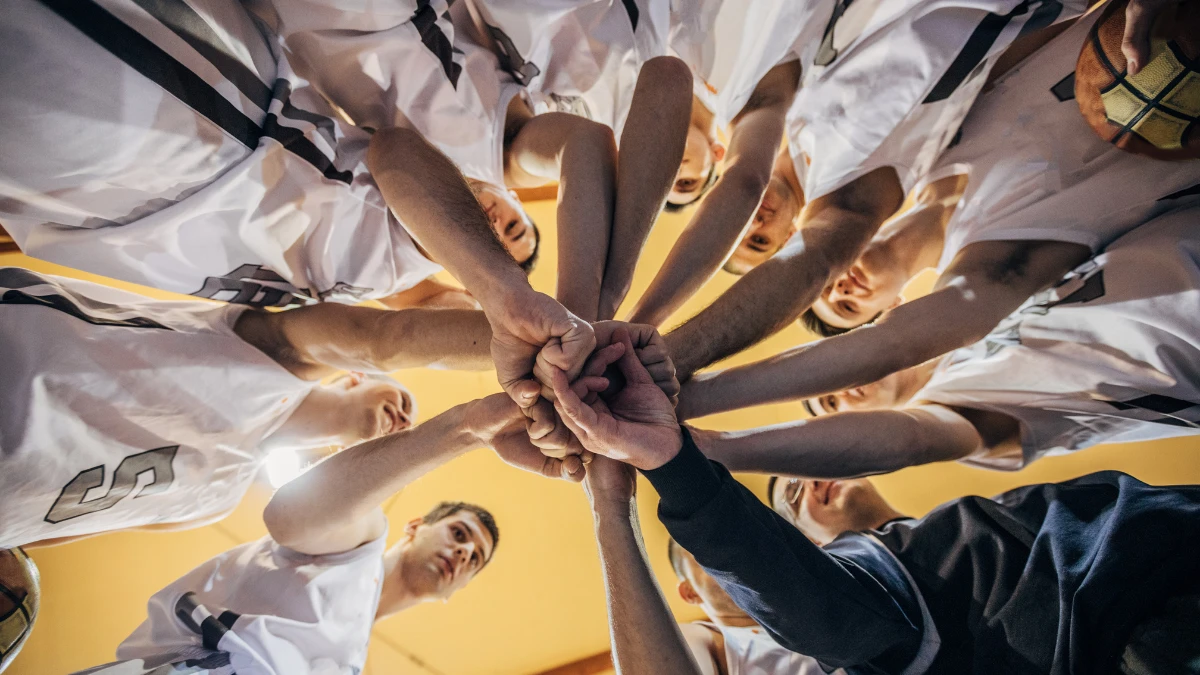
The 2023/2024 EuroLeague season is igniting anticipation among basketball fans across Europe and beyond. As the continent’s premier club competition kicks off, observers are keen to assess who has the talent, depth, and strategic edge to dominate the hardwood this fall. From reigning champions Real Madrid’s quest for repeated glory to burgeoning contenders such as AS Monaco and seasoned giants like Panathinaikos, the landscape is rich with storylines. The unfolding drama balances the weight of tradition with the thrill of reinvention — teams have bolstered their rosters, shifted coaching paradigms, and sharpened tactical approaches in preparation for a grueling campaign. With 18 clubs competing for supremacy, each lineup’s summer maneuvers are under scrutiny, impacting perceptions and early power rankings. The upcoming battles promise a captivating blend of star power, strategic intrigue, and high-stakes drama, making this new EuroLeague season a must-watch for basketball enthusiasts.
Real Madrid’s Championship Pedigree and Key Player Dynamics in EuroLeague Power Rankings
Real Madrid enters this EuroLeague season from a position of strength and confidence, having claimed the title in a surprising yet convincing manner last year. Despite a shaky start where they appeared far from favorites, their resilience shone through in the playoffs, underscoring the mental toughness intrinsic to championship teams. The retention of Chus Mateo as head coach ensures continuity in leadership, a decisive factor given the team’s mid-season turnaround previously demonstrated.
The core lineup remains largely intact with the noteworthy return of Facundo Campazzo, an influential playmaker whose tenacity and court vision elevate Real’s offensive schemes. Departures of Nigel Williams-Goss, Adam Hanga, Anthony Randolph, and Petr Cornelie hardly dent their competitive edge, as these players were not pivotal to last season’s success. This stability contrasts with many EuroLeague teams undergoing significant roster upheavals.
Walter Tavares, the towering Cape Verdean center, is undeniably the cornerstone of Real Madrid’s game plan. His near-unguardable presence in the paint requires opponents to deploy complex defensive schemes, often disrupting typical EuroLeague defensive patterns. Complementing Tavares, forwards Gabriel Deck and Guerschon Yabusele provide powerful inside scoring and rebounding, forming arguably the league’s most formidable frontcourt duo.
The team’s versatility also extends to wings like Mario Hezonja and Dzanan Musa, both expected to grow into consistent contributors throughout the season, building on their promising displays in the prior year. Veterans Rudy Fernandez, Sergio Llull, and Sergio Rodriguez inject invaluable experience during tight contests, embodying the blend of youth and experience conducive to extended success.
- Key aspects to watch in Real Madrid’s campaign:
- Effective use of Tavares in both offense and defense
- Fostering consistent scoring from wings Hezonja and Musa
- Maintaining veteran leadership through Fernandez, Llull, Rodriguez
- Integration of Campazzo for playmaking and tempo control
| Player | Position | Role Impact |
|---|---|---|
| Walter Tavares | Center | Defensive anchor / paint presence |
| Facundo Campazzo | Point Guard | Primary playmaker |
| Gabriel Deck | Power Forward | Inside scorer and rebounder |
| Mario Hezonja | Wing | Perimeter contributor |
| Rudy Fernandez | Guard/Forward | Veteran leadership |
Real Madrid appears well-positioned to sustain its dominance this EuroLeague season, showcasing a roster built on stability, star power, and strategic depth.
Monaco’s Ambitious EuroLeague Contenders Shaping Up a Formidable Backcourt
AS Monaco enters this fall with invigorated ambitions following a notable rise in the EuroLeague hierarchy. The major headline from their offseason is the acquisition of Kemba Walker — a marquee name recently transitioned from the NBA. This signing elevates Monaco’s backcourt to potentially the most dominant in the competition, blending NBA experience with EuroLeague savvy. The coaching staff, led by Sasa Obradovic, is tasked with balancing Walker alongside Mike James and maintaining on-court chemistry.
The roster depth has been significantly enhanced, particularly after previous lean periods that saw tight rotations. The addition of versatile players such as Mam Jaiteh, Terry Tarpey, and Petr Cornelie addresses depth concerns in key frontcourt positions and defensive capabilities. This is vital for Monaco’s aspirations, signaling their intent not just to reach the Final Four—as achieved last season—but to be genuine title contenders.
- Strengths and focal points for Monaco:
- Backcourt depth with Walker, James, Okobo, and Loyd
- Improved frontcourt rotation includes Jaiteh, Hall, Motiejunas
- Enhanced defensive options through Terry Tarpey
- Maintained balance with role players Brown, Ouattara, Diallo
Nevertheless, Monaco faces tactical challenges in maximizing their offensive potential, as the playstyles of key guards overlap somewhat. Fine-tuning rotations and unleashing their backcourt firepower cohesively will determine just how far they can ride this season.
| Position | Players | Notes |
|---|---|---|
| Point Guard | Kemba Walker, Mike James, Elie Okobo | Experience mix, high offense |
| Shooting Guard | Jordan Loyd, Mike James | Scoring options, backcourt flex |
| Center | Mam Jaiteh, Donta Hall, Donatas Motiejunas | Rotation depth |
| Forward | Terry Tarpey, Petr Cornelie | Defense and physicality |
AS Monaco’s summer investments signal a confident drive to challenge traditional powerhouses in EuroLeague basketball this fall.
Fenerbahce’s Tactical Depth and Resilience Testing EuroLeague Power Rankings
Fenerbahce remains a heavyweight contender, highlighted by persistence through last season’s fluctuations. Their start was promising; however, a mid-season dip linked to injuries showed vulnerabilities, especially after the loss of key players Johnathan Motley and Scottie Wilbekin. Yet, the team rallied impressively to contest closely in the playoffs, underscoring the veteran coaching of Dimitris Itoudis.
This season, the squad’s core remains intact, with enhancements aimed at frontcourt versatility. Georgios Papagiannis and Sertac Sanli provide additional options, complementing the likes of Nigel Hayes-Davis and Dyshawn Pierre. The backcourt retains experience through players such as Nick Calathes and Tyler Dorsey, with new addition Yam Madar poised to contribute fresh energy.
- Critical factors affecting Fenerbahce’s outlook:
- The need for increased guard scoring output
- Frontcourt depth and rotation flexibility
- Defensive improvement to support Itoudis’ system
- Maintaining consistency despite injury risks
The balance between dynamic offense and steady defense will dictate if Fenerbahce can surpass their prior playoff performances. Guard production, in particular, will be heavily scrutinized, as the team seeks to become more reliable in crunch time.
| Player | Role | Notes |
|---|---|---|
| Johnathan Motley | Forward | Recovery status critical |
| Georgios Papagiannis | Center | Frontcourt option |
| Scottie Wilbekin | Guard | Focus on scoring consistency |
| Nick Calathes | Guard | Experienced playmaker |
| Yam Madar | Guard | New energy |
Fenerbahce’s ability to translate talent into sustained results will be a defining storyline as the EuroLeague season progresses.

Panathinaikos’ Ambitious Reconstruction and Its Influence on EuroLeague Standings
The appointment of Ergin Ataman as head coach has injected fresh vigor into Panathinaikos, aiming to resurrect the club’s once-dominant presence in EuroLeague competition. Ataman’s track record of rebuilding Anadolu Efes into champions makes him a fitting choice for this task. The team’s overhaul includes an emphasis on a balanced attack with Kostas Sloukas at the fulcrum, paired alongside rebounding maestro Matthias Lessort, forming a potentially devastating pick-and-roll partnership.
Ataman’s influence is tangible in the revamped lineup, blending youth and promising talent such as Kyle Guy and Jerian Grant alongside seasoned veterans. This balancing act seeks to accelerate team cohesion, yet the challenge remains substantial given the short period to synchronize numerous new acquisitions and fit them into EuroLeague’s competitive tempo.
- Key components of Panathinaikos’ rebuild:
- Experienced backcourt led by Kostas Sloukas
- Interior presence of Matthias Lessort
- Complementary scorers: Juancho Hernangomez, Kyle Guy, Jerian Grant
- Emphasis on defensive solidity and quick offensive transitions
While the team possesses impressive firepower, early consistency and offensive diversity beyond the pick-and-roll combination are focal issues. This unpredictability may impact Panathinaikos’ initial position in the power rankings, yet the club’s passionate fan base and strategic vision suggest a promising trajectory ahead in the EuroLeague.
| Player | Role | Expectation |
|---|---|---|
| Kostas Sloukas | Point Guard | Team leader, offensive orchestration |
| Matthias Lessort | Center | Dominant rebounder, interior defense |
| Kyle Guy | Shooting Guard | Shooting and scoring |
| Jerian Grant | Guard | Playmaking and defense |
| Juancho Hernangomez | Forward | Versatile scorer and rebounder |
Panathinaikos is a team to watch, where calculated risk-taking and coaching acumen will shape their fortunes this season.
Emerging Contenders and Dark Horses Challenging Traditional Powers in EuroLeague Power Rankings
Beyond the perennial favorites like Real Madrid and Panathinaikos, several emergent clubs are poised to challenge the established hierarchy. Partizan Belgrade, a team laden with history and now under the leadership of Zeljko Obradovic, is making a concerted push for the EuroLeague Final Four. Retention of key players such as Kevin Punter and Zach LeDay, supplemented by the arrivals of PJ Dozier and Frank Kaminsky, ensures a potent mix of scoring and defensive presence.
Similarly, Virtus Bologna has revamped its roster after coaching turmoil, bringing in Luca Banchi and promising talents like Devontae Cacok and Ognjen Dobric. Although considered outsiders for major success, their blend of youth and experience could surprise several opponents.
Maccabi Tel Aviv’s remarkable recent trajectory continues, with a consistent core led by Lorenzo Brown and Wade Baldwin. Their balanced and deep squad enables sustained competitiveness, bolstered by strategic signings like Jasiel Rivero who enhances interior offense. They represent a genuine contender capable of pushing deep into the playoffs and beyond.
- Potential breakout teams to monitor:
- Partizan Belgrade: seasoned, ambitious, playoff-ready
- Virtus Bologna: rebuilding with a fresh coaching approach
- Maccabi Tel Aviv: continuity and depth foster high ceiling
- Baskonia and Zalgiris also showing potential to disrupt
This evolving competitive field reflects the growing depth of the EuroLeague, where tactical innovation and roster strategies increasingly dictate outcomes. Each of these clubs carries aspirations to upset the traditional powerhouse narratives, enriching the season’s storylines.
| Team | Key Players | Distinctive Strengths |
|---|---|---|
| Partizan Belgrade | Kevin Punter, Zach LeDay, PJ Dozier | Offensive firepower, experienced coaching |
| Virtus Bologna | Daniel Hackett, Devontae Cacok, Marco Belinelli | Young talents blended with veterans |
| Maccabi Tel Aviv | Lorenzo Brown, Wade Baldwin, Jasiel Rivero | Depth and versatility |
| Baskonia | Markus Howard, Nico Mannion | Run-and-gun offensive style |
| Zalgiris | Keenan Evans, Edgaras Ulanovas | Structured approach, strong home court |
What sets Real Madrid apart in EuroLeague competition?
Real Madrid excels due to a blend of championship experience, retained core players, and the dominant inside presence of Walter Tavares which disrupts opposing strategies and forms a defensive lynchpin.
How might Monaco’s backcourt alter EuroLeague power dynamics?
Monaco’s backcourt, spearheaded by Kemba Walker and Mike James, introduces NBA-level scoring talent and playmaking that could challenge traditionally elite guard-centric teams, forcing tactical adjustments league-wide.
Can Fenerbahce overcome last season’s inconsistency?
Fenerbahce’s success hinges on the maturation of their guard scoring and depth contributions. If frontline versatility matches backcourt improvements, their playoff position could improve substantially.
Is Panathinaikos a title contender after its overhaul?
While ambitious, Panathinaikos faces challenges in quickly synchronizing a new roster. Their talent base and coaching pedigree suggest playoff qualification is a strong possibility, but an immediate title remains uncertain.
Which emerging teams might disrupt EuroLeague projections?
Partizan’s mix of coaching savvy and player talent, alongside Maccabi’s cohesive roster and Virtus’s fresh roster approach, makes them the principal candidates capable of challenging the hierarchy’s stability.