


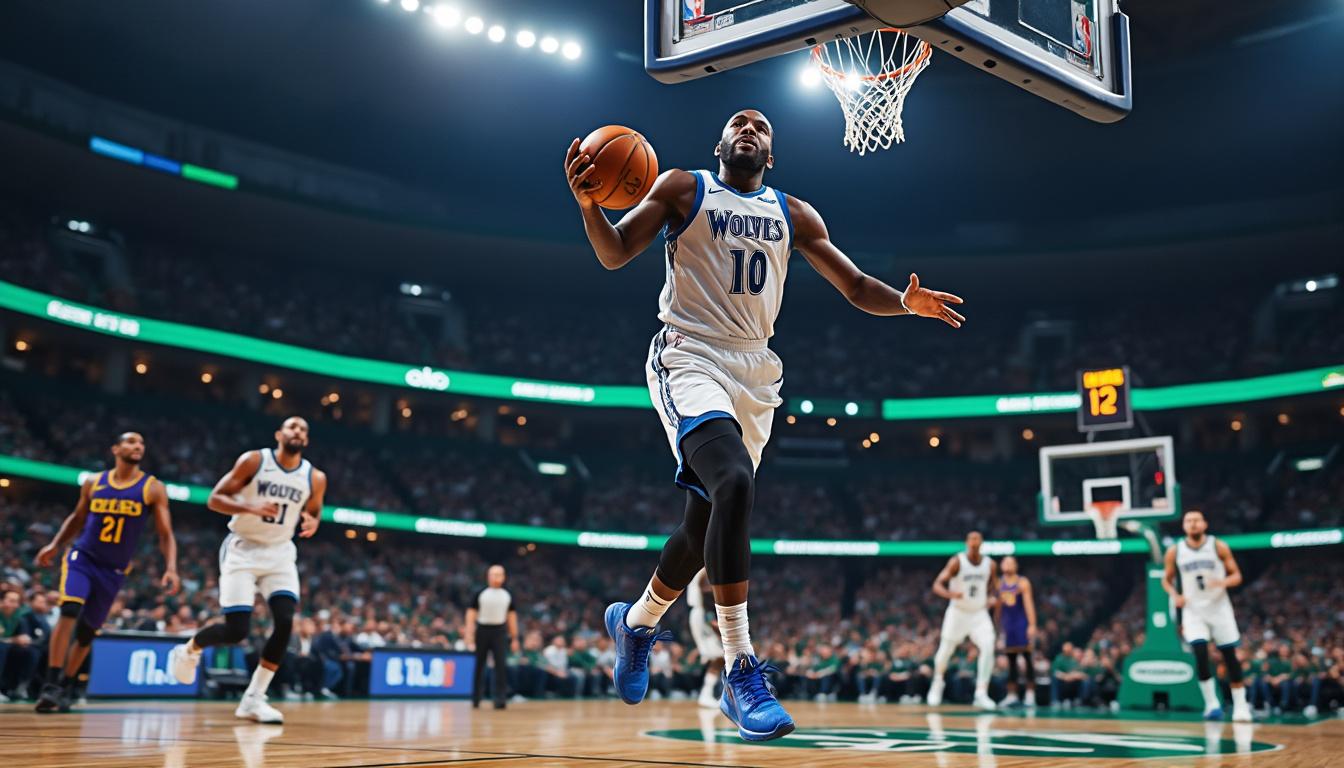
The NBA spotlight focused on the Target Center in Minneapolis on November 29, 2025, where the Minnesota Timberwolves hosted the Boston Celtics in a game that challenged the defensive mettle of the Wolves against the championship aspirations of the Celtics. Both teams entered the matchup with identical 10-8 records, eager to assert their domination in a competitive Eastern and Western Conference landscape. What made this game especially riveting was the tactical battle on the defensive end—a realm where the Wolves have been asserting a notable identity this season. This contest wasn’t just about a regular season tally but a litmus test for Boston’s title credentials, putting their offensive prowess to a stern defensive trial by Minnesota’s resilient squad.
The Celtics arrived off a narrow 117-114 win over the Detroit Pistons, showcasing their ability to close games with high efficiency. However, Minnesota’s Wolves sought to snap a three-game losing streak, banking heavily on their defense to derail Boston’s challenge. The Clash was representative of shifting NBA narratives where defense increasingly influences outcomes amid fast-paced and high-scoring matchups.
Analyzing Minnesota Timberwolves’ Defensive Strategy Against Boston Celtics
The Minnesota Timberwolves’ defense has emerged as a stout force in the 2025 season, embodying a ‘defense first’ mentality that has transformed their game approach. In the matchup against the Boston Celtics, this strategy was evident in their tactical execution and effort. The Wolves utilized a mixture of man-to-man coverage with timely zone defenses, employing aggressive perimeter pressure to disrupt the Celtics’ rhythm and force turnovers.
- Perimeter defense intensive: Wolves defenders focused on limiting three-point opportunities for Boston, contesting every shot and switching effectively on screens.
- Rebounding focus: Minnesota targeted defensive rebounds to prevent second-chance points, critical when facing a Celtics squad adept at crashing the boards.
- Help defense: The Wolves demonstrated well-coordinated help schemes, collapsing quickly to challenge Boston’s penetration, thereby cutting off driving lanes.
- Defensive communication: Constant vocal cues facilitated seamless rotations on picks and switches, minimizing breakdowns.
Such tactics were not only effective in stemming Boston’s offensive flow but also showcased the Wolves’ growth under defensive coordinator strategies this season. They held the Celtics below their season average points per game for significant stretches, signaling a successful containment effort.
| Defensive Metrics | Minnesota Timberwolves | Boston Celtics |
|---|---|---|
| Opponent FG % | 39.7% | 45.3% |
| Defensive Rebounds | 42 | 34 |
| Turnovers Forced | 18 | 12 |
| Blocks | 6 | 3 |
The defensive toughness displayed by the Wolves redefines their game matchup dynamics, giving them a competitive edge not just for the night, but for potential playoff scenarios. For more on NBA defensive trends and analysis, visit NBA spotlight games around November.
Boston Celtics’ Offensive Response and Title Credentials Under Pressure
The Boston Celtics came into the game poised to demonstrate why they are among the Eastern Conference’s elite and legitimate title contenders. Their offensive unit carried a balanced attack, led by sharpshooters and versatile forwards able to exploit mismatches. Yet, the intense pressure from the Wolves’ defense tested the Celtics’ adaptability and perseverance.
Boston’s offensive scheme featured a heavy reliance on spacing and ball movement, aiming to create open shots especially beyond the arc. However, the Wolves disruptiveness forced Boston into tougher, contested shots and, at times, rushed decisions leading to costly turnovers.
- Ball movement struggles: Facing relentless pressure, the Celtics had reduced assists compared to their regular rate, signaling challenges in finding open shooters.
- Isolation plays: Boston relied on key players to create scoring opportunities individually, testing the Wolves’ one-on-one defensive strength.
- Second-chance scoring: Celtics pushed to grab offensive rebounds, though the Wolves’ defensive rebounding limited these attempts.
- Adaptation midgame: Boston adjusted by increasing pick-and-roll plays and attacking the paint to counter perimeter pressure.
Despite these efforts, the game highlighted pressure points that the Celtics need to refine to sustain a prolonged title run, especially against teams like Minnesota who prioritize defense. The challenges they faced offer important insights into their resilience and areas for adjustment as the season unfolds.
| Offensive Statistics | Boston Celtics | Minnesota Timberwolves |
|---|---|---|
| Field Goal % | 42.1% | 44.5% |
| 3-Point Attempts | 32 | 26 |
| Assists | 21 | 19 |
| Turnovers | 14 | 11 |
For a more in-depth view of Celtics’ title hopes and tactical evolution, see the latest on November 2025 championship landscapes.
Key Player Impact: Wolves’ Defensive Anchors vs. Celtics’ Offensive Agents
Individual performances were critical in shaping the game’s defensive-offensive duel. The Wolves featured defensive stalwarts who executed the game plan with precision. Their ability to guard multiple positions and switch effectively was instrumental in containing Boston’s versatile offense.
- Defensive anchors: Minnesota’s big men protected the rim effectively, recording several blocks and altering shots.
- Perimeter disruptors: Wing defenders logged high steal numbers and drew charges, disrupting the Celtics’ ball handlers.
- Leadership roles: Veteran defenders marshaled on-court communication, ensuring cohesive defensive effort.
Conversely, Boston’s offensive leaders had to balance aggressive scoring attempts with managing turnovers under the Wolf’s stranglehold. This tug-of-war underscored the depth and talent on both rosters, making the game a showcase of star impact.
| Player | Team | Points | Rebounds | Steals | Blocks |
|---|---|---|---|---|---|
| Wolf Defensive Star | Minnesota Timberwolves | 15 | 10 | 3 | 2 |
| Celtics Primary Scorer | Boston Celtics | 28 | 6 | 1 | 0 |
Player health and availability remain essential, with the latest updates accessible via NBA injury reports.
Impact of This Game Matchup on Playoff Projections and Season Outlook
This showdown between the Minnesota Timberwolves and Boston Celtics carries wider implications for the 2025 NBA season. Both teams vie for playoff positioning, making every win vital. The defensive intensity displayed by the Wolves signals their preparation to be a tough playoff adversary able to challenge top-tier offenses, while the Celtics must adapt their strategies to sustain their title credentials on the road difficult environments.
- Playoff seeding influence: Results impact both teams’ standings in a tightening playoff race.
- Team confidence: Victory or defeat shapes morale and tactical trust in season-long plans.
- Coaching adjustments: Both coaching staffs gained insights into opponent tendencies for future encounters.
- Fan engagement: The high-stakes matchup invigorated fan interest and media coverage around NBA narratives.
| Team | Pre-Game Record | Post-Game Record | Playoff Probability | Title Contender Status |
|---|---|---|---|---|
| Minnesota Timberwolves | 10-8 | 11-8 | 73% | Emerging Dark Horse |
| Boston Celtics | 10-8 | 10-9 | 82% | Top Contender |
More on evolving power rankings and team projections through the season can be found at NBA power rankings November 2025.
Chronologie interactive
Minnesota Timberwolves vs Boston Celtics
29 novembre 2025
The highlights reel from this intense battle further emphasizes the defensive grit from the Wolves and the resilience of the Celtics offense.
Fan and Media Reactions: Evaluating the Season Progress Post Game
Following the game, analysts and fans dissected the implications of the Wolves’ defensive performance and how it tested the Celtics’ title credentials. Social media buzz and expert panels debated the sustainability of such matchup strategies and the potential shifts that could occur in the playoff picture with continued defensive intensity. Fans praised the Wolves for their energy and effort, while also recognizing the Celtics’ skill and experience in handling pressure situations.
- Media accolades: Pundits highlighted Minnesota’s defensive transformation as a key storyline.
- Fan discussions: Online forums echoed debates over who holds the upper hand in future encounters.
- Player interviews: Key figures discussed respect for opponent strengths and areas to improve.
- Analytical reviews: Data-driven insights reinforced the importance of defense-first approaches.
For comprehensive weekend recaps and top story analyses in the NBA and beyond, visit NBA weekend highlights.
How did Minnesota Timberwolves’ defense impact the Celtics’ offense?
The Wolves’ defense disrupted Boston’s rhythm by contesting shots, forcing turnovers, and limiting open three-point opportunities, thereby reducing their offensive efficiency.
What does this game say about the Celtics’ title hopes?
While the Celtics showed resilience and scoring ability, their struggles against tough defense reveal areas needing improvement to maintain strong title contention.
Who were the standout players in this game matchup?
Minnesota’s defensive stalwarts and Boston’s leading scorers played pivotal roles, influencing the game’s defensive-offensive dynamics.
What are the playoff implications of this game?
The outcome affects seeding probabilities for both squads and provides insights into their postseason preparedness, with the Wolves emerging as a dark horse and the Celtics maintaining top contender status.
Where can fans find more NBA coverage and updates?
Comprehensive NBA news, injury reports, power rankings, and game analyses are available on various sports news platforms like The Sports Event.