

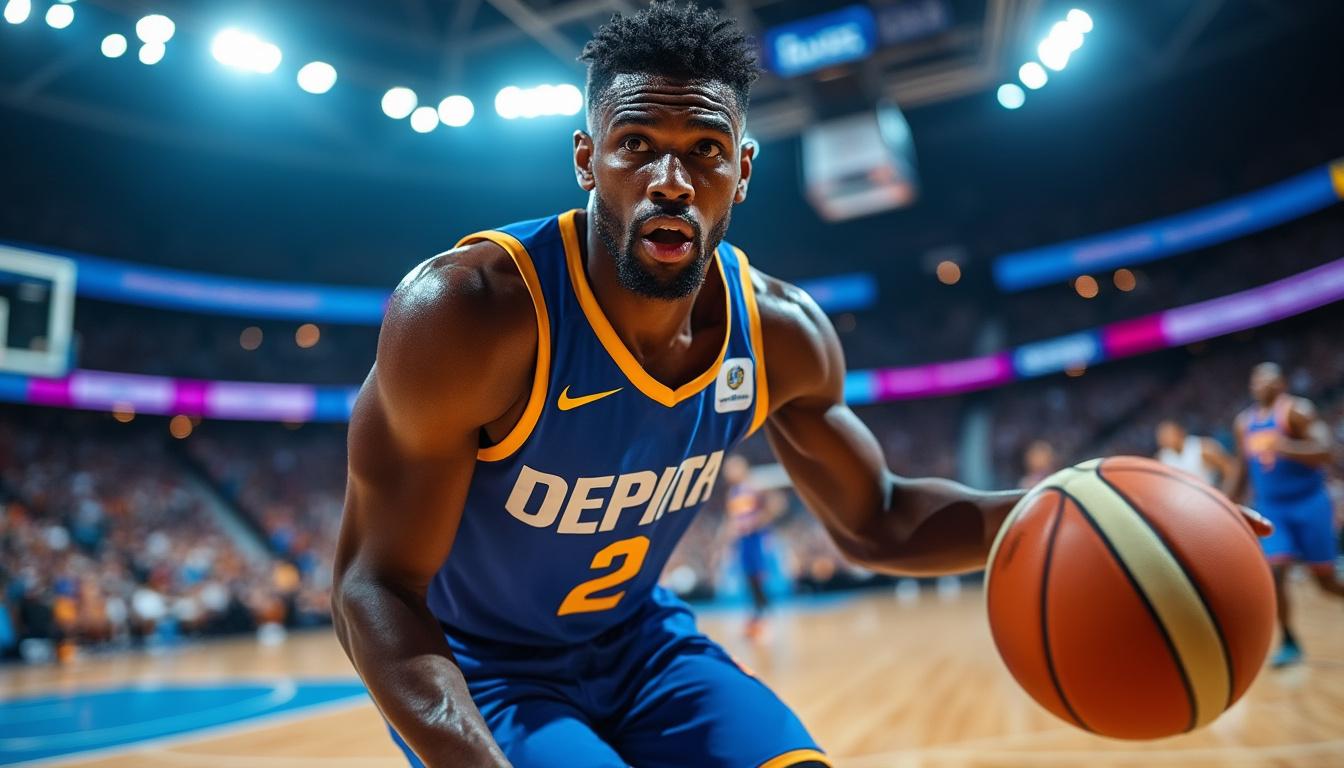
The 2025 EuroLeague season is intensifying as teams aggressively maneuver for a coveted top four position before the upcoming break. With just seven rounds remaining in the regular season, every game carries immense weight in determining playoff positioning and home-court advantage. Notably, Olympiacos firmly secures the top spot with a 20-7 record, virtually guaranteed to finish in the elite bracket. However, behind them, a fierce battle unfolds among Panathinaikos, Fenerbahce, Monaco, and others vying for the remaining top-tier seeds in this premier basketball competition. The convergence of seasoned powerhouses and ambitious challengers fuels a riveting showcase of skill, strategy, and endurance as the standings shift with every push on the court.
This pivotal phase not only shapes individual team dreams but also influences the dynamic landscape of European basketball. The EuroLeague’s competitive structure rewards the top four finishers with a clear edge: home-court advantage in the playoffs, a historically decisive factor linked to more frequent Final Four appearances. As anticipation builds toward the mid-season hiatus, observers and fans are keen to dissect matchups, statistical projections, and the underlying strategies shaping this gripping pursuit. Among the narratives are the withdrawal of Alba Berlin and the exciting entries of Dubai, Hapoel Tel Aviv, and Valencia for the next 2025–26 campaign, promising fresh rivalries and storylines once the league resumes.
Looking ahead, the removal of the third-place game from the Final Four format marks a significant evolution in the EuroLeague’s competitive design. This change underscores the league’s responsiveness to player feedback and evolving priorities, placing even greater emphasis on securing the ultimate positions within the regular season. Interactive data and expert analytics are highlighting how teams manage workloads, bench depth, and tactical ingenuity as the break approaches, all in a calculated effort to optimize playoff positioning. Through this intense stretch, the competition sharpens, spotlighting both established contenders and emerging forces eager to disrupt the traditional hierarchy.
In sum, the 2025 EuroLeague update captures a moment of heightened tension and calculated ambition, with teams pushing hard to claim a top four spot before the break. This crucial juncture reflects the intricate balance of endurance and strategy fundamental to professional European basketball’s elite echelon, setting the stage for compelling action and narratives true to the sport’s spirit in 2025.
Key Highlights:
- Olympiacos holds a secure top four position with a commanding 20-7 record.
- Panathinaikos and Fenerbahce have over a 70% probability of finishing in the top four.
- Monaco and Paris are in tight contention for direct playoff spots, sparking intense competition.
- The 2025–26 season will introduce three new teams: Dubai, Hapoel Tel Aviv, and Valencia.
- The elimination of the third-place Final Four game aims to refocus competition on championship outcomes.
Analyzing the fierce battle for a EuroLeague Top Four position
The race for a top four standing in the EuroLeague has escalated into a complex tactical chess match, with teams deploying diverse strategies to improve their chances before the regular season break. Securing a position within this elite group is about more than prestige; it offers tangible benefits such as home-court playoff advantages that historically increase the likelihood of reaching the Final Four. To understand this urgency, one must dissect both the statistical probabilities and the gameplay variables underlying this competition.
Leading the pack is Olympiacos, who have remarkably demonstrated consistency across offensive and defensive efforts. With a 20-7 record, their dominance is underpinned by a combination of veteran leadership and young talent, creating a balanced roster capable of adapting to various opponents. Their assured top four status is confirmed by analytical models incorporating Elo rankings, Net Advanced Ratings, and Strength of Schedule data. This stability allows Olympiacos to influence league dynamics by setting the pace for contenders chasing hard behind them.
Meanwhile, Panathinaikos and Fenerbahce maintain impressive probabilities hovering above 70% to clinch the sought-after spots. Both teams have displayed resilience in clutch moments and strategic rotations that optimize player fitness over the grueling season. Panathinaikos, with a 17-10 record, frequently leverages home advantages and a robust defensive system, while Fenerbahce’s adaptability on the road, including a critical delayed Round 17 fixture against Paris, underscores their capacity to secure crucial wins.
Challengers like Monaco and Paris operate in a narrower margin for error, facing stiff competition from Crvena Zvezda and Bayern Munich, tied closely at 16-11 records. For these clubs, squad depth and tactical flexibility become decisive. Monaco, with a 44.9% chance of top four positioning, is noted for its late-game scoring bursts and ability to capitalize on opponents’ lapses. Paris, at 47.4%, benefits from a dynamic offense led by rising stars capable of game-changing plays. These contests emphasize the fluidity and unpredictability defining the league’s climactic phase.
The pursuit of top four privilege involves numerous intricate considerations:
- Scheduling challenges: Teams must navigate back-to-back matches and high-stakes road games.
- Injury management: Preserving player health while maximizing minutes is critical.
- Strategic rotation: Coaches must balance immediate game outcomes with long-term stamina.
- Psychological resilience: Maintaining focus during this pressure-packed stretch can influence results.
- Analytics-driven adjustments: Real-time data informs tactical choices and player deployment.
These factors combine to create a scenario where mental toughness and flexibility often distinguish those who secure favorable positions from those who falter. The battle for the top four, therefore, captures both the physical and cerebral dimensions of elite basketball competition in 2025.

Upcoming season changes and their impact on EuroLeague teams’ strategies
The EuroLeague’s evolving structure in 2025-26 introduces pivotal changes impacting how teams approach their campaign goals and long-term strategies. The most notable shift is the confirmation of 20 participating clubs, an increase that will alter the competition’s dynamics and strategic frameworks. While Alba Berlin’s exit removes a familiar contender, the admittance of Dubai, Hapoel Tel Aviv, who earned their berth by triumphing in the EuroCup, and Valencia ensures new rivalries and tactical challenges for established teams.
This expanded field compels teams to recalibrate squad rotation policies and talent acquisition strategies. Season-long durability becomes paramount in this more congested schedule, influencing training regimens, scouting priorities, and player development. Clubs anticipating these adjustments are already incorporating advanced performance analytics to mitigate injury risks and optimize peak performance phases.
Another critical update is the removal of the third-place game from the Final Four. The match had come under scrutiny for lacking competitive intensity, a sentiment mirrored in this year’s final when Panathinaikos and Olympiacos demonstrated minimal drive despite their historic rivalry. Eliminating this game redirects focus to the championship, potentially shifting how teams strategize their postseason effort and regular-season positioning.
The revamped Final Four structure may also influence team psychology approaching the playoffs. Without the consolation spot to contest, teams are likely to channel energies exclusively toward either winning the title or regrouping for the off-season. This sharpens the importance of securing a favorable playoff seed during the regular season, reinforcing the high stakes of the current push for a top four ranking.
Teams are also adapting to the league’s new calendar, with the 2025-26 season commencing on September 30, 2025. This timing impacts preseason preparation and conditioning programs, compelling clubs to adjust their timelines for integrating new talent and tactical systems. The competitive calendar’s rhythm requires meticulous planning to sustain competitive form throughout both the regular season and the intensified playoff phase.
Key strategic implications of these changes for EuroLeague participants include:
- Heightened importance of squad depth to survive longer, more rigorous seasons
- Focus on player health and recovery protocols to manage added games
- Increased emphasis on real-time analytics to guide tactical adjustments
- Psychological preparation for sharper playoff intensity without consolation games
- Strategic scouting to quickly assess and counter new team entrants
Adapting effectively to these developments will separate playoff contenders from teams that falter under the season’s expanded demands, consolidating the EuroLeague’s reputation as Europe’s premier basketball competition.
How recent EuroLeague matches illustrate the relentless push for playoff positioning
Individual matchups in the run-up to the break vividly showcase how teams are raising the intensity to secure advantageous playoff seeds. The latest rounds have seen pivotal clashes that not only affect standing points but also momentum and psychological edge. Matches such as the highly competitive battles between Panathinaikos and Fenerbahce or Monaco’s late-game resilience against high-ranking opponents exemplify the league-wide urgency.
One notable example came from Fenerbahce’s recent tough road win at Olympiacos, which not only cemented their resolve but also underscored the necessity of consistent performance across all 40 minutes of play. Conversely, Monaco’s inability to withstand a late fourth-quarter surge from their rivals spotlighted the fine margins in this tightly packed fight for playoff spacing. These intense encounters deliver compelling narratives about endurance and tactical in-game flexibility crucial to top-four ambitions.
Adding layers to the drama are the subtle shifts driven by postponed fixtures, such as Fenerbahce’s pending Round 17 game against Paris. Such scheduling anomalies test team adaptability and can tilt the scales in tightly contested rankings. The cumulative effect of these matches forms a rollercoaster in the standings, with teams like Paris, Crvena Zvezda, Bayern Munich, and Partizan all fiercely contesting the Top 6 spots with razor-thin point differences.
A detailed look at the standings after Round 27 illustrates the volatility:
| Team | Wins | Losses | Position | Top 4 Probability |
|---|---|---|---|---|
| Olympiacos | 20 | 7 | 1st | 100% |
| Panathinaikos | 17 | 10 | 3rd | 86.2% |
| Fenerbahce | 17 | 9 | 2nd | 72.4% |
| Monaco | 16 | 11 | 5th | 44.9% |
| Paris | 16 | 10 | 4th | 47.4% |
The stakes heighten as every victory or defeat reshuffles the rankings and playoff projections. A close review of recent matchups and upcoming fixtures reinforces how the break points serve as critical milestones for assessment and strategy recalibration.
Statistical projections and expert insight on the playoff race intensity
Data-driven forecasts continue to illuminate the complexities underlying the leaderboard competition. Figurei8th’s statistically rigorous simulations, incorporating past two seasons’ Elo rankings and current Net Advanced Ratings, offer invaluable clarity. These projections suggest that Olympiacos remains the dominant force with unparalleled probability of maintaining a top four standing, whereas teams like Panathinaikos and Fenerbahce show significant likelihood but require sustained consistency.
Meanwhile, Paris, Partizan, Bayern Munich, and Crvena Zvezda are locked in a punishing contest targeting Top 6 and direct playoff qualification. The French team currently edges this group ahead in predicted probabilities, while the German team struggles for sameness and must optimize performance to uplift their playoff chances. Equally gripping is the narrow window for Milano, Barcelona, Real Madrid, and Anadolu Efes competing for the last two Play-In slots, reflecting the depth and overall competitiveness of this basketball competition.
These projections reflect several critical insights:
- Home-court advantage disproportionately benefits teams within the top four, emphasizing the strategic push to secure those spots.
- Statistical models highlight the importance of strength of schedule and recent head-to-head results in playoff positioning.
- The ongoing battle for playoff seeding increases pressure on team management to make real-time tactical and roster decisions.
- Teams outside the top clusters face slimmer odds, indicating a clear but challenging gap in competition levels.
- Dynamic roster changes, injuries, and coaching adaptations remain pivotal influencers in late-season outcomes.
As the regular season nears the break, these projections serve as a strategic guide for teams and fans alike, outlining the wide range of plausible outcomes and highlighting crucial matchups to monitor. The tension inherent in this phase exemplifies the EuroLeague’s high caliber and dynamic nature in 2025.
The significance of the upcoming break and its strategic implications for teams
The impending break in the EuroLeague season introduces an essential juncture for teams to recalibrate their approach to the remainder of the competition. This pause in competitive play offers a valuable window for recovery, tactical reassessment, and mental refocus, all of which profoundly influence the ultimate playoff push. The intensity with which teams are striving to secure a top four position before this interval underscores the break’s strategic relevance.
For many clubs, the break is not simply downtime but a critical period for addressing key challenges such as injuries or tactical shortcomings evidenced in the first two-thirds of the season. Coaches utilize this period to refine team chemistry, integrate new tactical schemes, and optimize player workloads for the rigorous playoff demands ahead. Moreover, the psychological impact of entering the break in a strong position versus a precarious standing can significantly affect team morale and confidence.
This strategic mindset leads teams to adopt a variety of approaches as the break nears:
- Intensifying physical preparation and recovery protocols to reduce injury risk.
- Focusing on critical matchups that may define their seeding and playoff trajectory.
- Utilizing advanced analytics to identify strengths, weaknesses, and actionable adjustments.
- Prioritizing mental health and resilience training to sustain competitive edge.
- Monitoring and managing key player minutes with an eye on long-term postseason viability.
Teams also navigate the psychological pressures of being on the cusp of the top four. The awareness that a single loss might jeopardize home-court playoff advantage adds an extra layer of tactical complexity. The balanced focus on physical conditioning and tactical execution during these final rounds often separates contenders from hopefuls. As teams reconvene post-break, the battle front may shift as rested players, tactical updates, and injury recoveries come into play.
For fans and analysts, the break functions as both a pause and a pivot point, offering time to evaluate the evolving leaderboard and predict how strategic adaptations might unfold. This phase exemplifies the meticulous planning and resilient spirit required to thrive in one of Europe’s top basketball competitions.
For detailed updates on the season’s crucial games and team performances before the break, explore EuroLeague crucial games in 2025 and Round 8 standings review.
Why is finishing in the EuroLeague top four so important?
Finishing in the top four guarantees home-court advantage during the playoffs, which statistically increases the likelihood of advancing to the Final Four, making it a crucial position for teams.
Which teams currently have the highest probability of securing a top four spot?
As of the latest standings, Olympiacos has a guaranteed top four finish. Panathinaikos and Fenerbahce also boast over a 70% chance, with Monaco and Paris close behind.
What major changes will impact the 2025-26 EuroLeague season?
The upcoming season will feature 20 teams, including new entries Dubai, Hapoel Tel Aviv, and Valencia. Additionally, the Final Four will no longer feature the third-place game.
How does the removal of the third-place game affect competition?
Removing the third-place match emphasizes the championship focus, eliminating a competition often considered lacking competitive intensity, and reshapes how teams strategize their postseason approach.
What role does the mid-season break play in teams’ playoff strategies?
The break allows teams to recover physically and mentally, reassess tactics, and prepare strategically for the playoffs, making the push before the break critical for positioning.