
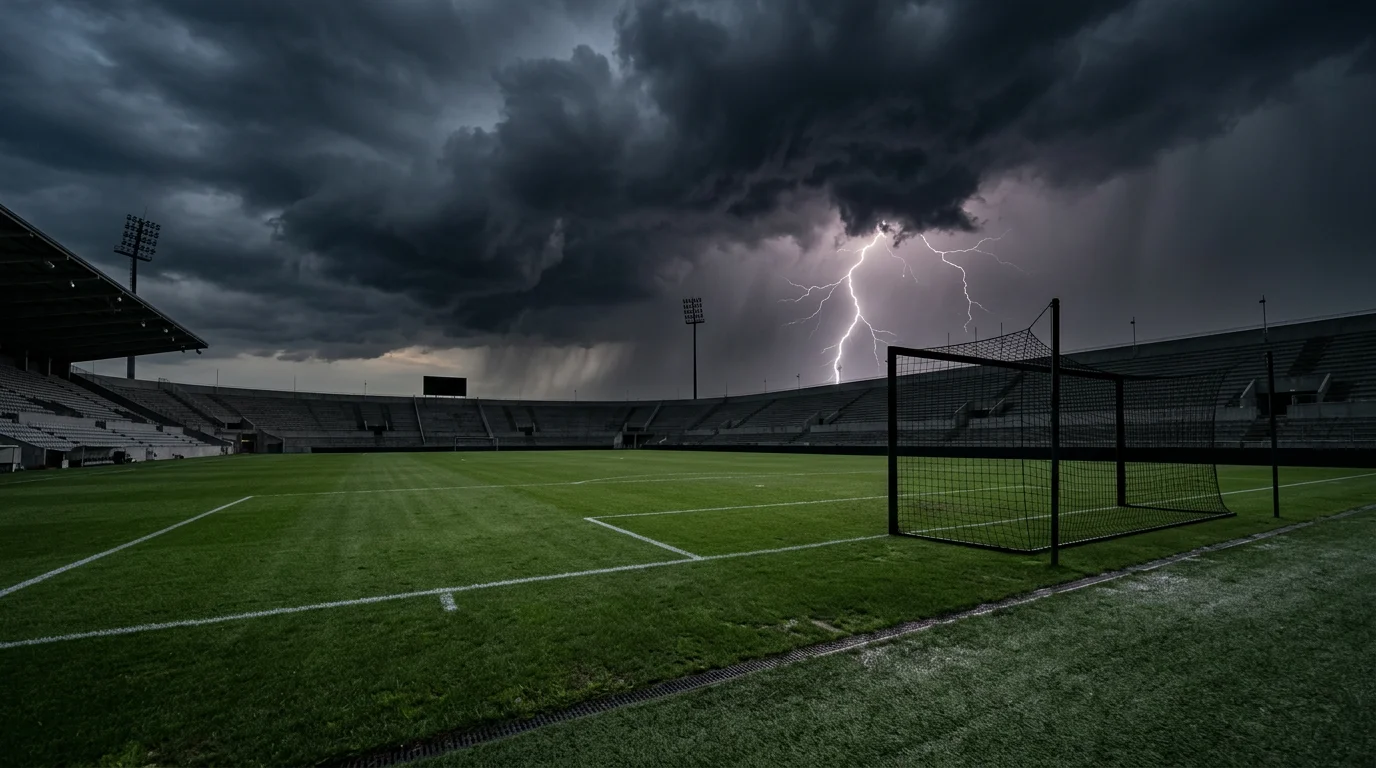
Six football matches were suspended due to electrical storms at the last major tournament in the United States, a stark warning of the disruption thunderstorms and lightning could bring to the 2026 World Cup.
Lightning Strikes: The Eight-Mile Rule

Under United States safety protocols now adopted by FIFA, play must stop immediately if lightning is detected within eight miles of a stadium. This policy came into sharp focus during last summer’s Club World Cup in Charlotte. North Carolina. Chelsea’s match against Benfica was halted in the 86th minute when lightning struck nearby. Kickoff had been at 16:00 local time, but the game didn’t resume for nearly two hours, finally wrapping up at 20:38, four hours and 38 minutes after it began.
The eight-mile rule follows recommendations from the National Oceanic and Atmospheric Administration (NOAA). When a strike is detected within that radius, everyone in the stadium bowl must evacuate and seek shelter. A 30-minute countdown starts, but if another strike occurs within the zone, the clock resets. Only after a full half-hour passes without a new strike can fans return and players warm up for the restart.
Delays on the Rise: Recent Trends in US Football
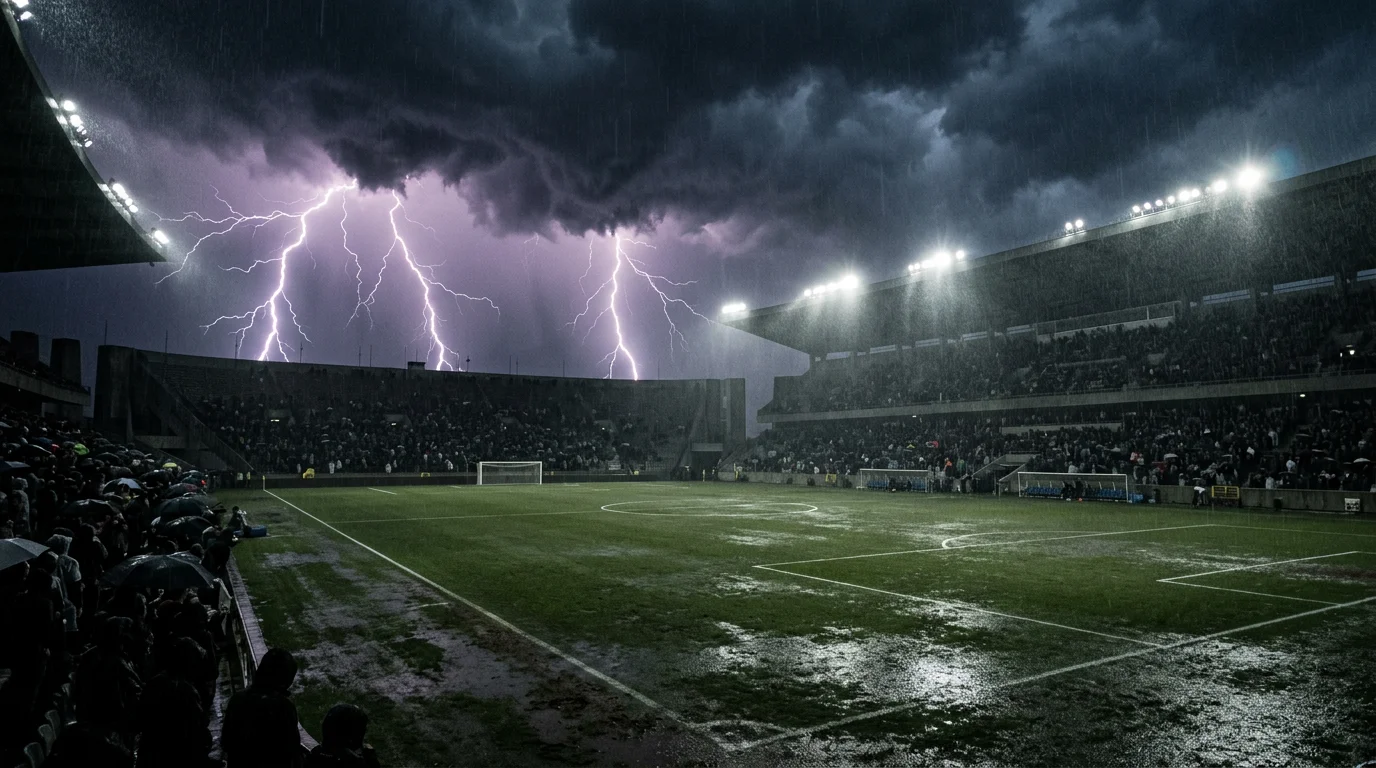
Weather stoppages are becoming routine in US football, especially during the summer. The Club World Cup saw six matches delayed by storms, but pre-season friendlies have also been hit. In Orlando, a high-profile Manchester City vs Barcelona match two years ago was held up for an extended period by thunderstorms.
| Tournament or Match | Location | Delay Cause | Length of Delay |
|---|---|---|---|
| Club World Cup: Chelsea vs Benfica | Charlotte. NC | Lightning | Nearly 2 hours |
| Club World Cup: 5 other matches | Various US cities | Electrical storms | Not specified |
| Man City vs Barcelona (pre-season) | Orlando. FL | Thunderstorms | Lengthy delay |
Peak thunderstorm season aligns with the 2026 World Cup schedule across the United States. Canada, and Mexico. Disruptions like these are likely to remain a feature of summer football in North America.
Safety Protocols and Tournament Implications
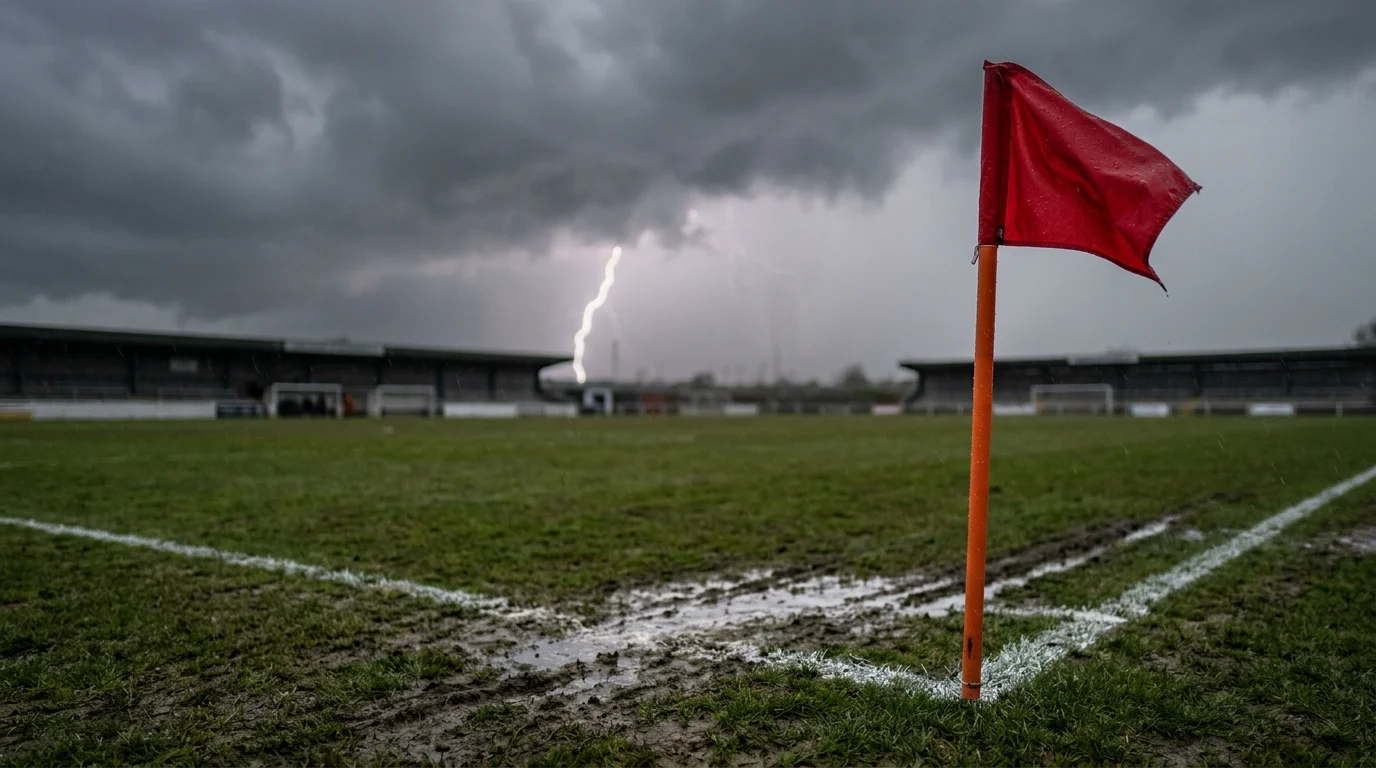
Player and supporter safety takes precedence. Once lightning is detected within eight miles, evacuation is mandatory. The 30-minute clock resets with every new strike, so stoppages can drag on, as they did in Charlotte when the match stretched to nearly five hours.
FIFA must follow local authority and NOAA guidelines for weather stoppages in the US, unlike in England, where a storm in a neighboring district might not halt play. In the US, even a single strike just inside the eight-mile boundary triggers a stoppage.
Thunderstorm risk will be a constant concern for the 2026 World Cup, with matches at the mercy of summer weather in many host cities. Delays could be lengthy, and organizers, teams, and fans will need to be ready for sudden interruptions.
For a deeper look at how weather could shape the tournament, including the effects of heat, humidity, and altitude, see this detailed analysis: how climate could impact World Cup matches.
Frustration is already mounting among players and coaches. Chelsea manager Enzo Maresca didn’t hold back after the Club World Cup delay, saying, "It’s a joke – this is not football," as his team waited nearly two hours in the changing rooms.
Any World Cup match affected by thunderstorms will follow these same protocols. If the weather refuses to cooperate, games could stretch late into the night.